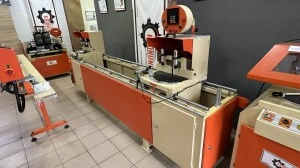


Whilst cutting PVC profiles does not require absolute precision – as any deviations can be compensated for when the material is melted – in the case of aluminium joinery, profile cutting must be precise; otherwise, gaps will appear at the joints, resulting in an unsightly appearance and even heat transfer through those areas.
For this reason, it is recommended that high-performance machines with a high degree of precision be used for the cutting operation.
Another aspect to be taken into account when cutting aluminium profiles is the need to lubricate and cool the area where the blade comes into contact with the profile; furthermore, to ensure a constant feed rate of the blade through the profile during cutting, it is recommended that the pneumatic pistons driving the cutting blades be fitted with a hydraulic brake. This process is known as ‘hydro-pneumatic feed’ of the blade (‘hydro-check’ or ‘hydraulic brake’).
Furthermore, in workshops that manufacture both aluminium and PVC joinery, two different sets of cutting equipment should be used; or, if this is not feasible, at least the blade should be changed depending on the type of material being cut (PVC or aluminium). For example, if PVC is cut after aluminium has been cut, the blade remains coated with lubricant which is then transferred to the PVC profile; this will compromise the quality of the weld because the pneumatic pistons acting as clamps that hold the profile in place during melting and welding may slip on the profile, thus resulting in poor weld quality.
As a rule, blades for cutting aluminium have negative teeth, whilst those for PVC have positive teeth.
Tag: cutting machines, aluminium profiles, aluminium cutting machines, PVC profiles, PVC cutting machines, double-glazing machinery
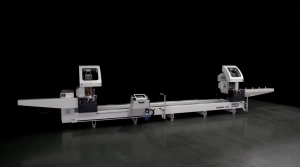
GEMINI V R – Masina automata de debitat la doua capete servo, 3 axe Ø550 mm
€38,800.00
€32,066.12
(VAT excluded)
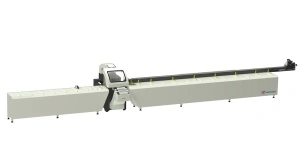
LEO plus - Centru de debitare cu taiere din spate in fata automat Ø 550 mm cu brat robotic pentru incarcare
€45,000.00
€37,190.08
(VAT excluded)
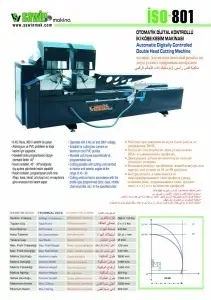
ISO 801 - Utilaj automat de debitat profile PVC si Al dublu cap (computerizat, ⌀-disc 450mm)
€12,500.00
€10,330.58
(VAT excluded)
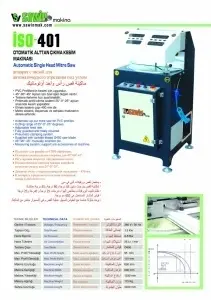
ISO 401 - Masina de debitat automata cu taiere de jos in sus Ø 450mm
€2,400.00
€1,983.47
(VAT excluded)
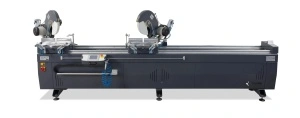
GEMINI II A – Mașină de debitat la două capete semiautomată Ø 400 mm
€16,000.00
€13,223.14
(VAT excluded)
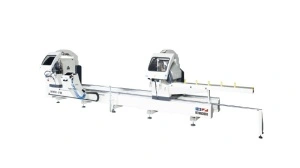
GEMINI VI - Masina de debitat la doua capete automata servo 3 axe 600 mm
€54,000.00
€44,628.10
(VAT excluded)
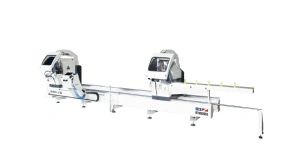
GEMINI V SA - Masina de debitat cu două capete, lamă frontală Ø 550 mm, cu poziționare automată și reglare semi-automată a unghiului
€40,000.00
€33,057.85
(VAT excluded)
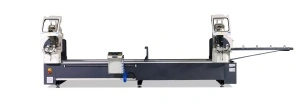
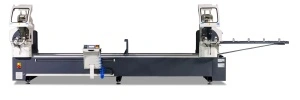
GEMINI IV SA - Masina de debitat la doua capete semiautomata 450 mm
€30,000.00
€24,793.39
(VAT excluded)
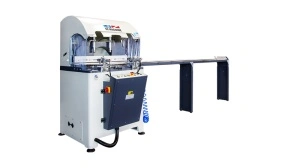
METEOR 600 - Masina de debitat automata cu taiere de jos in sus 600 mm
€12,040.00
€9,950.41
(VAT excluded)
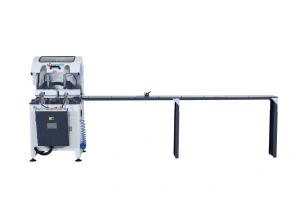
METEOR 500 - Masina de debitat automata cu taiere de jos in sus Ø 500mm
€9,000.00
€7,438.02
(VAT excluded)
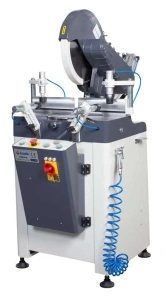
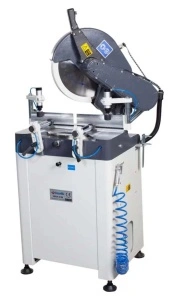
VEGA II M - Masina de debitat manuala cu prindere pneumatica si racire 400 mm
€3,370.00
€2,785.12
(VAT excluded)
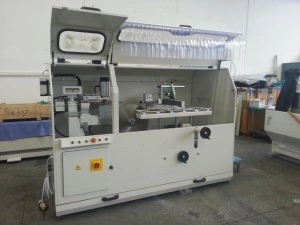
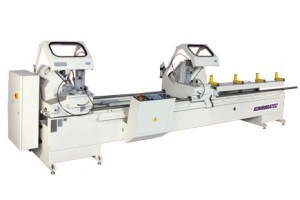
DGS450 Automatic double-head PVC and aluminium profile cutting machine (computerised, 550 mm disc diameter)
€36,000.00
€29,752.07
(VAT excluded)
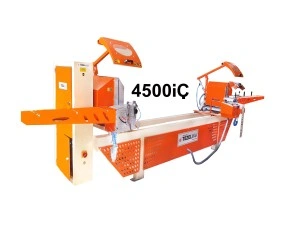
KRG 4500 Automatic double-head PVC and aluminium profile cutting machine (computerised, 450 mm disc diameter)
€15,000.00
€12,396.69
(VAT excluded)
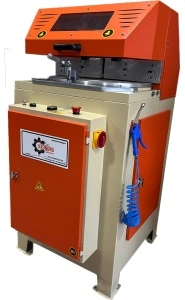
KRG 403 Single-head automatic PVC and aluminium profile cutting machine (automatic angle adjustment, 400 mm disc diameter)
€3,300.00
€2,727.27
(VAT excluded)
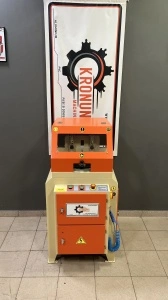
KRG 401 Single-head automatic PVC and aluminium profile cutting machine (⌀ 400 mm disc)
€3,300.00
€2,727.27
(VAT excluded)